
Imagine you’re about to approve a complex DeFi transaction from a new AMM on Arbitrum. Gas is stamped in the wrong token, the approval scope is unlimited, and the contract address was only recently deployed. You have Ledger connected, and your browser wallet pops a generic signature request: “Approve.” This is the concrete, recurring moment DeFi power users dread — and it is precisely the situation wallets should be engineered to prevent.
This article compares how wallet design choices — simulation, approval management, hardware compatibility, and cross-chain tooling — change the security and usability calculus for an informed US-based DeFi user. I focus on Rabby Wallet as a representative of a security-first, multi-chain extension with transaction simulation, contrasted implicitly with mainstream alternatives like MetaMask, Trust Wallet, or Coinbase Wallet where relevant. The goal: give you a mechanism-focused mental model for picking a primary wallet and a clear checklist for what to test before you sign anything.
- Core mechanisms that matter to DeFi power users
- Where Rabby’s choices shift your risk profile
- Myths vs reality: what Rabby actually changes (and what it doesn’t)
- Comparative trade-offs: Rabby versus generic alternatives
- Decision-useful heuristics: a checklist before you make Rabby your daily driver
- What to watch next: signals that would change this assessment
- FAQ
Core mechanisms that matter to DeFi power users
Wallets are more than a key store; they mediate intent. For an advanced DeFi user the useful distinctions are mechanistic: how does a wallet (1) present the effective consequences of a signature, (2) let you limit ongoing exposure, (3) integrate hardened key storage, and (4) handle multi-chain friction? Each design choice carries trade-offs between friction and protection.
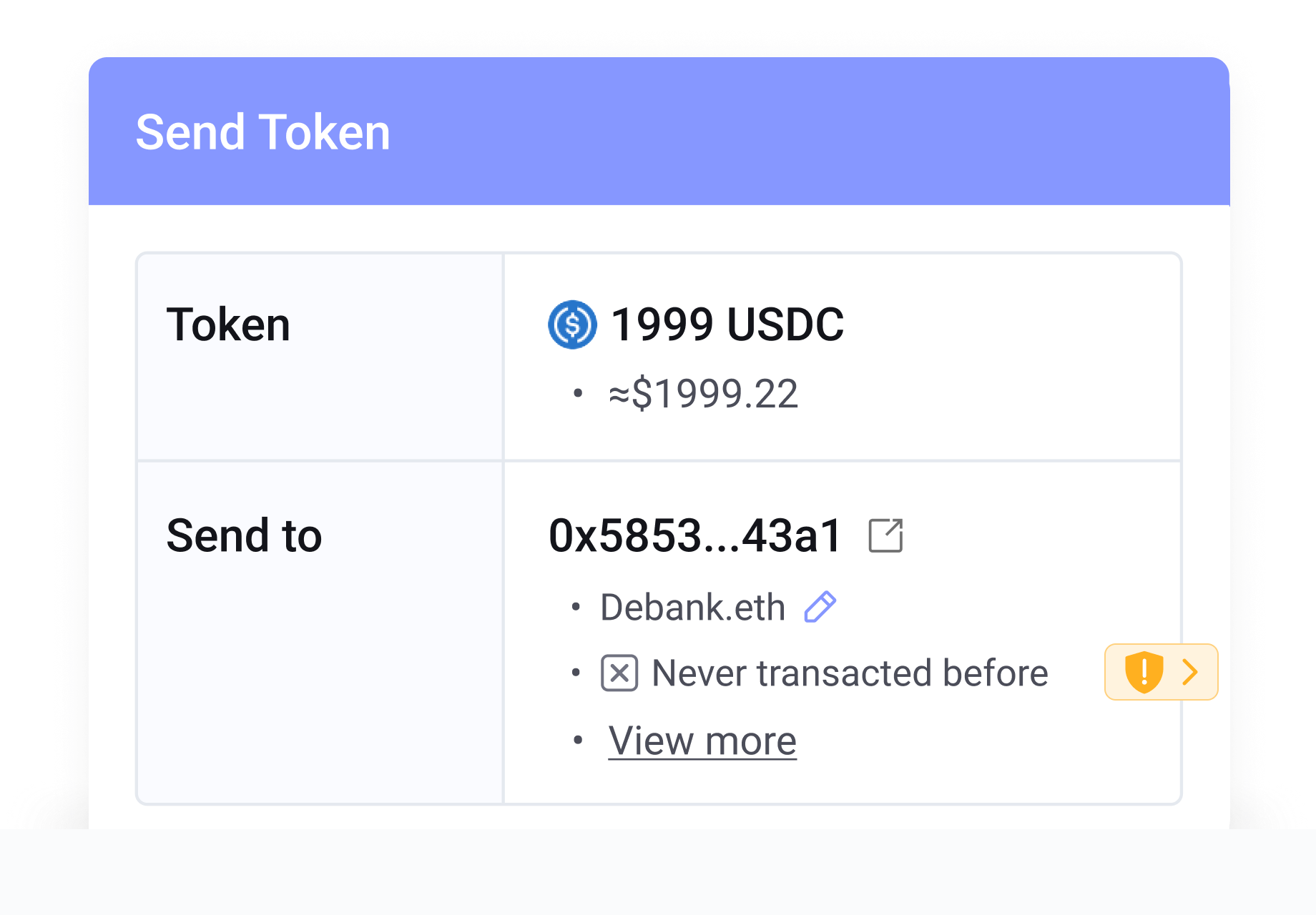
Transaction simulation is one such mechanism. At signing time a good simulator computes the expected token balance deltas and fee costs, and surfaces anomalies (e.g., recipient mismatch, reentrancy-like flows, or approvals larger than the amount being moved). Rabby explicitly simulates transactions before confirmation and displays estimated token balance changes and fee costs to the user. This combats “blind signing” — the failure mode where users sign without understanding the net effect. The trade-off: simulation increases latency and sometimes produces confusing estimates on complex, multi-step contract calls; a wallet must expose the simulation succinctly without overloading users.
Approval revocation is another mechanism that scales security over time. Unlimited approvals are an economic convenience but become a liability if a dApp or router is later compromised. Rabby’s built-in revocation tool lets users inspect and cancel active token approvals, reducing attack surface without forcing a habit of wallet-hopping. The trade-off here is cognitive: users must actually use the revocation tool and understand when to revoke vs. when doing so will break legitimate flows (e.g., recurring market makers or vault contracts).
Where Rabby’s choices shift your risk profile
Rabby positions itself as a DeBank-built, open-source, non-custodial wallet that tries to shift the interface from “sign now” to “understand then sign.” Some concrete mechanisms matter for that claim:
– Pre-transaction risk scanning: Rabby screens transactions for known risky patterns (previously exploited contracts, suspicious approval requests, non-existent recipient addresses). This is a pattern-matching and heuristic defense — powerful but not foolproof. It reduces certain classes of human error but cannot protect against novel contract logic obfuscation or zero-day exploit techniques.
– Hardware wallet integration: For US users or institutions that must meet higher operational security, Rabby supports Ledger, Trezor, Keystone, and others. The advantage is that signing happens on an external device; the browser merely relays the simulated intent. The remaining vector is ensuring the simulation presented by the host matches the on-device display — an area where user habits and device UX still matter.
– Automatic network switching and cross-chain tools: Rabby auto-switches networks to match a dApp and offers a gas top-up feature to send gas tokens across chains. That reduces friction — no more failed transactions because you’re on the wrong chain — but it also introduces new decisions: the wallet must manage which chain pays gas, and cross-chain gas transfers increase exposure to bridging errors or user confusion about token provenance.
Myths vs reality: what Rabby actually changes (and what it doesn’t)
Myth: “A wallet with simulation means you are safe.” Reality: simulation reduces some classes of blind-sign attacks by making consequences explicit, but simulations are only as good as the information the wallet can derive. Complex contract logic, meta-transactions routed through new proxies, or intentionally obfuscated call data can still hide undesired behavior. Treat simulation as an additional sensor, not as a perfect detector.
Myth: “Open source implies secure.” Reality: open-source code increases the chance of public review and independent audits, which Rabby supports by licensing under MIT. But disclosure alone does not equal review. The past incident in 2022 — when a contract associated with Rabby Swap lost about $190,000 — shows that operational and smart-contract security remain live risks even for open projects. The team’s response (freezing the contract, compensating users, and performing further audits) is a positive signal, but it doesn’t erase the structural reality that user-facing DeFi systems combine many moving parts.
Myth: “Hardware wallets make everything invulnerable.” Reality: hardware wallets greatly reduce the risk of key exfiltration, but social-engineering, malicious dApp interfaces, or signing misleading payloads remain problems. A hardware wallet will sign whatever the user confirms; if the signature prompt is opaque, the chain of protection breaks. That’s why pairing hardware devices with a wallet that simulates transactions (so you can compare the host’s explanation to the device’s display) is materially better than using either alone.
Comparative trade-offs: Rabby versus generic alternatives
Rabby focuses on defensive UX: simulation, approval revocation, pre-transaction scanning, and wide hardware support. MetaMask offers ubiquity and a gigantic ecosystem plugin base; Coinbase Wallet and Trust Wallet emphasize convenience and fiat on-ramps. If your primary goal is security-first DeFi tooling, Rabby’s feature set aligns well with that objective. If immediate fiat rails and simple on-ramp flows matter more, you’ll miss those convenience features in Rabby (it lacks a built-in fiat on-ramp and native in-wallet staking).
For institutional or multi-sig setups, Rabby integrates with Gnosis Safe, Fireblocks, and others — making it usable in custody or multi-signer workflows. This differentiates it from lightweight mobile wallets, which are often single-key by design. The trade-off for a power user who wants both convenience and institutional-grade controls is often operational: more complexity in setup, but a lower chance of catastrophic loss.
For more information, visit rabby.
Decision-useful heuristics: a checklist before you make Rabby your daily driver
1) Test the simulator: deploy a small-value interaction with a known dApp and compare the simulated token deltas to on-chain post-transaction results. If simulation estimates are consistently informative, that’s a green signal. If they’re noisy on important contract types you use, you’ll need to add manual inspection steps.
2) Practice approval hygiene: use the revocation tool and observe how revoking an approval affects legitimate workflows. Some DeFi aggregators and open orders can break if you revoke approvals blindly.
3) Pair with a hardware wallet and verify device displays on multi-step transactions. If the device doesn’t show sufficient detail for your use cases, consider alternate device firmware or workflows.
4) Validate cross-chain flows you rely on using small amounts first. Gas top-up is convenient, but bridging and chain-specific token conventions create corner cases.
5) Consider your fiat needs: if you require in-wallet fiat purchases, you’ll need an external on-ramp and must remember the custody and AML implications of the US regulatory environment when moving fiat on-ramps off-wallet.
What to watch next: signals that would change this assessment
Monitor two categories of signals. First, operational security updates: more frequent, thorough third-party audits, formal verification of critical contracts, and public bug bounty outcomes would materially raise confidence. Second, UX-resilience signals: improved device-host consistency (where wallets and hardware wallets jointly render clearer, matching summaries) and standardization of simulation outputs across wallets would reduce the cognitive load for users who switch between wallets.
If Rabby or competitors develop native fiat on-ramps and in-wallet staking without compromising the security-first design (i.e., maintaining clear simulation and approval controls), that would shift the trade-off between convenience and control favorably for mainstream DeFi adoption. Conversely, a string of unresolved exploits tied to approval flows or bridge tooling would underscore the limits of current UX defenses and force heavier reliance on institutional custody solutions.
FAQ
Q: How does Rabby’s transaction simulation differ from the confirmations I see in MetaMask?
A: MetaMask shows raw call data, method names (when available), and basic gas estimates; Rabby explicitly simulates the transaction to show estimated token balance changes, fees, and risk flags before signing. The difference is one of presentation and analysis: Rabby runs an interpretive layer that tries to translate call intent into net economic effect. Both can be useful; Rabby’s layer aims to reduce blind signing but may sometimes struggle with heavily obfuscated call graphs.
Q: Does Rabby protect me from all smart-contract exploits?
No. Rabby reduces certain classes of user error and known-risk patterns through simulation, rescans, and revocation tooling. It cannot prevent novel zero-day vulnerabilities in third-party contracts or protect against off-chain social engineering. The 2022 Rabby Swap incident is a reminder that even security-focused projects can be affected — the right posture is layered defenses plus careful operational practices.
Q: Can I use Rabby with my Ledger device on Chrome?
Yes. Rabby supports Ledger, Trezor, Keystone, and several other hardware wallets and is available as an extension for Chromium-based browsers. Pairing Rabby with a hardware signer is recommended for higher-value DeFi operations because it separates key storage from the browser environment.
Q: I want the easiest path from USD to DeFi positions in one app. Is Rabby the right choice?
Not necessarily. Rabby currently lacks a built-in fiat on-ramp and native staking. If you prioritize single-app convenience for buying crypto and staking within the wallet, wallets with integrated fiat rails or exchange-native wallets may be a better fit. Rabby targets users who prioritize secure DeFi interaction ergonomics over integrated on-ramps.
For readers ready to experiment, install the extension, connect a hardware device, and run the checklist above with micro-transactions on a testnet or a small mainnet amount. If you’re considering a migration plan from a conventional wallet, test the ‘Flip’ toggle and seed-import flows to ensure your habitual dApps keep working. For a next-step resource, examine the wallet’s documentation and community audit reports before increasing exposure — and if you want a concise place to start exploring Rabby’s features, see this resource on rabby.

コメント